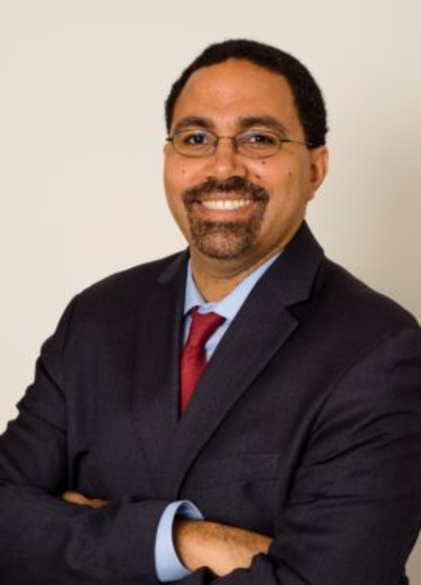
FOR IMMEDIATE RELEASE FROM ED TRUST CEO, PRESIDENT DR. JOHN B. KING, JR. COMMENCE ADDRESS AT UNIVERSITY OF MEMPHIS!
Each of you has worked hard to earn the distinction of graduate from The University of Memphis.
You balanced challenging classes with clubs, sports, and Greek life — and gained lifelong friends. You lifted up groundbreaking research while you held down one or two jobs. You “Instagram-ed” every single one of the 100 tiger sculptures on campus and around town. You marched in the band and you marched in the streets for causes you believe in. And you discovered your mettle in Memphis.
As you prepare to graduate, you may have concerns about our nation and our world.
We see conflict, climate change, and divisive politics in America and around the globe. We see disparities in opportunity that, in our nation, often are drawn along lines of race, class, and gender. In too many communities we see growing inequality and frustration at the “other”: blaming immigrants or people who practice a different faith.
But on this day, as we celebrate all you achieved, we must remind ourselves of all that is possible, and embrace the challenge of making our nation and world better for all.
Indeed, the promise of America is that through hard work and perseverance everyone can lead a thriving life.
Nancy Davis, who is graduating today, embodies this ideal.
Nancy earned her associate degree in 1965. She became a flight attendant, got married, and started a family; and she never stopped pursuing her dream of earning a bachelor’s degree.
Nancy attended four colleges as her husband’s job took the family across the country. Eventually, Nancy put her college dreams on hold so she and her husband could put their kids through school. Finally, Nancy was one semester away from earning her bachelor’s degree. But then Nancy’s husband suffered a stroke, and she became a full-time caregiver. Thankfully, Nancy’s husband pulled through, and because of this university’s Finish Line program, Nancy, at the age of 71, has earned that hard-fought degree.
That is the promise of America — that with grit and determination, all of us can achieve our dreams.
Our nation’s history is the story of that promise being made more real — in fits and starts — for an ever-widening circle of Americans.
From the Civil War to the civil rights movement, from women’s suffrage to the continuing fight for equal pay for equal work, progress has been far too slow, but it has been real.
Through your education, you understand our current challenges and our history. But it’s not just what you learn that matters, it’s what you do with what you learn.
I believe that perhaps the greatest value of education is in applying your knowledge and skills to — what should be — one of the most active and important roles of your life: the role of citizen.
So, today, I’d like to talk to you about the joyous — yes, joyous — responsibility we have as citizens to improve our communities and our nation. I’ll strive to show that by approaching your role as citizens with three attitudes — joy, empathy, and hope — you’ll become more engaged in society, give our democracy the attention it needs, and be more capable of making progress on issues you care about.
First, I want to reassure you that you are up to this task. Your education has prepared you for good citizenship.
At the University of Memphis, you learned how to work collectively, solve problems, and appreciate diversity in opinions, ideas, and people. These skills and dispositions are vital to being a contributing member of a community.
You also learned to grapple with hard parts of our history, the legacy of which is with us today — including slavery, racism, s*xism, violence, and discrimination. In fact, this university was founded in the spirit of bringing people together through learning.
Through your service learning, you developed a deeper understanding of yourself and the importance of working toward something bigger than yourselves.
Your education has equipped you to become an engaged citizen for good reason. Education’s role in this country long has been to prepare Americans to contribute to our democracy.
Thomas Jefferson wrote, through education, Americans must come to “understand [their] duties to [their] neighbors and country … [t]o know [their] rights [and] to exercise with order and justice those [rights they] retain.”
Our founders defined those rights as “life, liberty, and the pursuit of happiness.” While the America of the founders did not reflect the ideal that all are created equal, we can be proud that our nation continues to work toward it.
The thing we must never forget about equal opportunity and our rights is that they exist only through vigilant and active citizenship. When I talk about citizenship as a means of protecting these things, I’m not just talking about marches and protests — although they are essential. Standing up for our rights also means sitting down at community meetings and engaging with neighbors. It means joining campaigns and running for office yourself. It means pulling the disenfranchised up — by providing access to healthcare in impoverished communities or teaching children in struggling schools.
Today, too often, people think of citizenship as a dusty relic.
But this challenge isn’t new. John Dewey, an early pioneer in American education, wrote, “The trouble … is that we have taken our democracy for granted; we have thought and acted as if our forefathers had founded it once and for all. We have forgotten that it has to be enacted anew in every generation.”
That is what I am calling upon you — graduates — to do: to refresh and redefine for a new generation what it means to be a good citizen.
Please click the link and read the full Commencement Address HERE!: (http://edtrust.us13.list-manage.com/track/click?u=b3ee15427b36011d31e8d14e3&id=f929af26d4&e=ff523f57e1
 Posted By: agnes levine
Wednesday, May 10th 2017 at 12:06PM
You can also
click
here to view all posts by this author...