The following is an excerpt from an article that was originally published by The Chronicle of Higher Education.
On the Meaning of MOOC's
"Even though I only have a high-school degree, I'm a professional student."
Q. At a conference in 2010, your said that in five years, "placed-based colleges," would be less important because of the rise of some of these video-based options and credentials. Should traditional college leaders be worried about their place-based model?
A. If they want to innovate, they should be worried about whether they're going to pick the right things and innovate in the right way. If the point is, can you just stay the same, I think the answer is no. Other countries are sending more kids to college. They're getting higher completion rates. They've moved ahead of us. The cost of an education just keeps going up. So you've go to see if you can change the way the system works. Having a lot of kids sit in the lecture class will be viewed at some point as an antiquated thing. On the other hand, having a bunch of kids come into a small study group where peers help each other, where you can explain why you're learning these various topics, that will be even more important. And so the skill sets that you want on the university campus and that you're really valuing and measuring and giving feedback to, I think those are shifting somewhat because we can take the lecture piece versus that study-group piece and make the lecture piece more of a shared element, and not have to have that duplicated again and again.
Yes, universities are somewhat reluctant to give up a piece. So it's not clear who those innovators will be. But I think its time is coming.
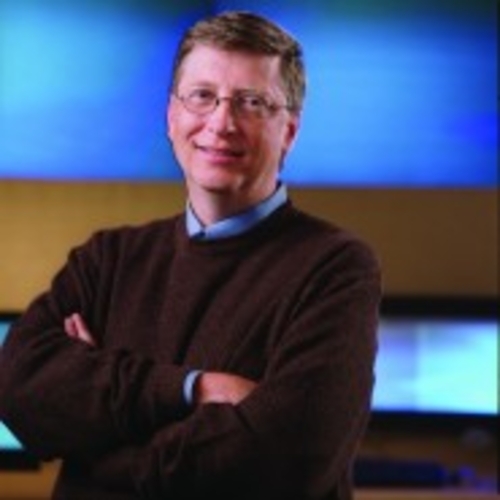
Q. Getting to some of those ideas, you're famously not a college graduate, since you left Harvard early to start Microsoft. So I'm curious what you think of EdX out of Harvard and MIT. What do you think of that model of certificates or badges for taking free online courses?
A. Well at the end of the day you've got to have something that employers really believe in. And today what they believe in by and large are degrees. And if you have a great degree then you're considered for jobs, and if you don't have that degree there's a lot of jobs you won't get consideration for. And so the question is, Can we transform this credentialing process? And in fact the ideal would be to separate out the idea of proving your knowledge from the way you acquire that knowledge. So even though I only have a high-school degree, I am a professional student. That is, I like to watch courses and do things online. So things like OpenCourseWare, the various lectures that have been put online, I consume a lot of those because I'm very interested.
Q. That's interesting. I'm hearing a lot about that idea in the tech industry—such as companies like Microsoft trying to hire programmers—but do you think this could work as well in things like humanities fields where it's harder to measure mastery?
A. Well, there are a lot of fields where things are fairly objective. If you want to be a nurse or a doctor, there are various exams that are given for those things. There are softer areas, like you want to be a salesman or something, but it's not even clear what college degree is appropriate for that. Employers have decided that having the breadth of knowledge that's associated with a four-year degree is often something they want to see in the people they give that job to. So instead of testing for that different profession, they'll be testing that you have that broader exposure.
More:
http://www.thegatesnotes.com/Topics/Educat...
 Posted By: How May I Help You NC
Wednesday, August 15th 2012 at 10:39AM
You can also
click
here to view all posts by this author...